🌿 Environmental Education for Conservation
Empowering students and teachers to become conservation actors in the Gobi Desert
"In the end, we will conserve only what we love; we will love only what we understand, and we will understand only what we are taught."
- Baba Dioum -
From awareness to action
In the Gobi, conservation depends not only on knowledge — but on people taking action.
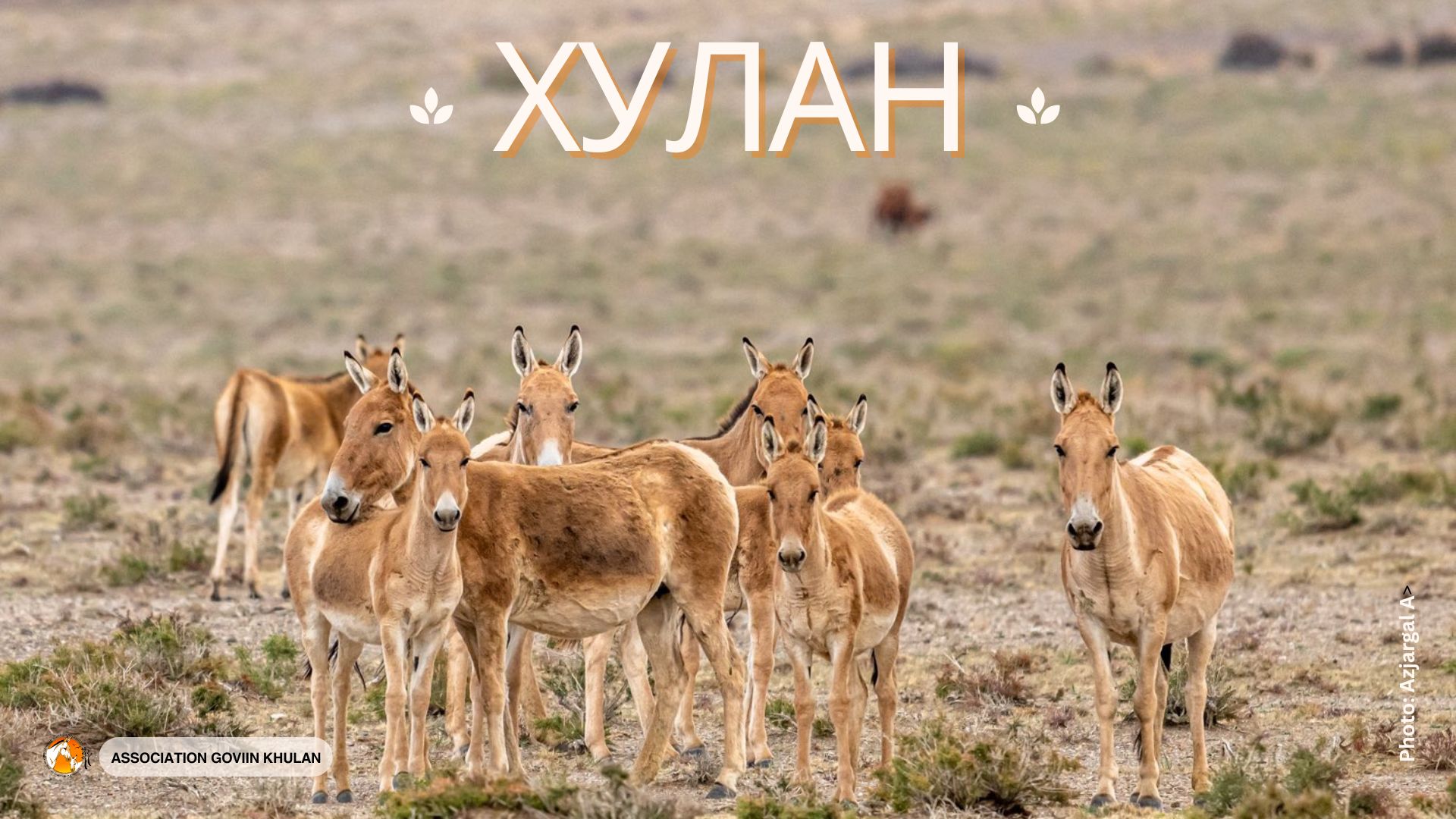
Our environmental education approach goes beyond traditional learning. We work with students and teachers to transform understanding into meaningful, locally driven conservation efforts focused on the Khulan and its ecosystem.
Our approach: from learning to action
We design educational activities that are:
-
Interactive
Engaging tools such as quizzes, games, and discussions to stimulate curiosity and participation -
Participatory
Students and teachers co-design activities based on their interests and local context -
Locally grounded
Rooted in the realities of the Gobi and the needs of communities -
Action-oriented
Turning knowledge into real conservation actions and outcomes
What we do in schools and communities
🌿Interactive learning sessions
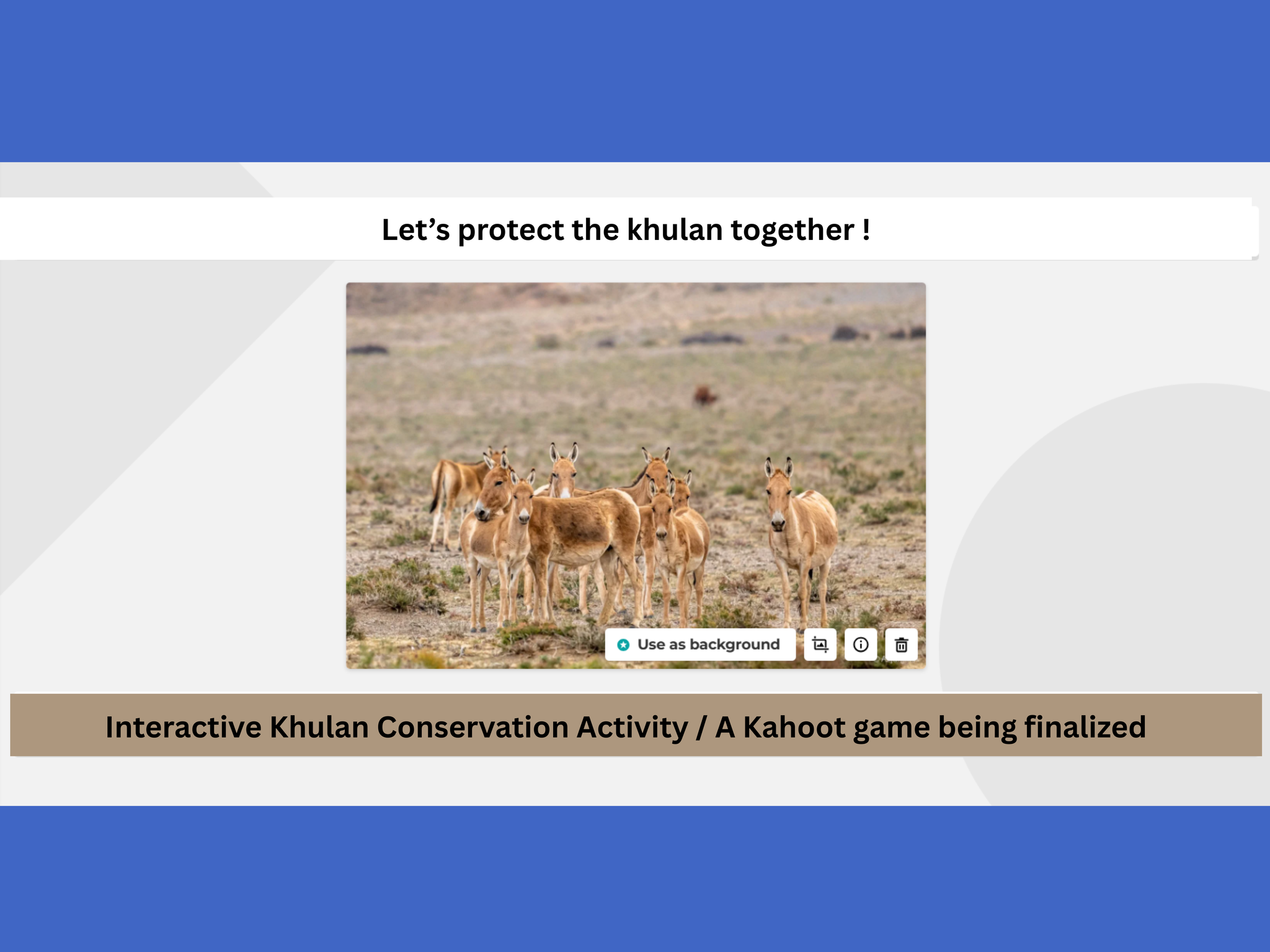
We develop engaging activities (such as Kahoot quizzes, games, discussions and more) to:
- Assess and reinforce knowledge about the Khulan and the Gobi ecosystem
- Encourage critical thinking about conservation challenges
- Connect ecological concepts to students’ daily lives
These sessions build on existing knowledge and experiences, helping students reflect, question, and deepen their understanding.
🌿Co-designed conservation activities
Students and teachers work together to:
- Identify local environmental challenges
- Propose realistic conservation actions
- Design projects such as awareness campaigns, observation activities, or school initiatives
This ensures that every activity is relevant, meaningful, and owned by participants.
🌿Students as conservation actors
We support students in becoming:
- Awareness leaders within their schools and communities
- Citizen scientists observing and documenting nature
- Problem-solvers addressing real environmental issues
Our role is to guide and support — enabling students to take initiative and lead.
🌿Teachers as partners
Teachers are central to long-term impact.
We provide:
- Ready-to-use educational resources
- Flexible activity frameworks
- Support for integrating conservation into lessons
By working together, we ensure that conservation education is sustainable and embedded in local learning environments.
🌿Connecting knowledge and reality
Our activities bridge:
- Scientific knowledge (ecology, biodiversity, conservation science)
- Local knowledge (herders’ experience, community perspectives)
This helps students understand the Gobi as a dynamic system where people and wildlife coexist.
Measurable and lasting impact
Our approach allows us to track and strengthen impact over time through:
- Student participation in interactive activities
- Co-designed projects and outputs
- Reflections and skill development
- Ongoing engagement in conservation actions
Unlike one-off activities, we focus on continuous learning and long-term involvement.
Our vision
We aim to support a new generation of locally rooted conservation leaders who:
- Understand their environment
- Take responsibility for its future
- Act to protect biodiversity and ecosystems.
Why it matters?
The future of the Gobi depends on those who live and learn within it.
By empowering students and teachers today, we contribute to a future where:
- Wildlife and people coexist
- Ecosystems remain resilient
- Conservation is driven by local communities.
🌿Get Involved
Are you a teacher, school, or partner interested in conservation education?
We collaborate with local stakeholders to develop meaningful, action-oriented learning
experiences.
👉 Contact us to learn more or co-design activities with your students.

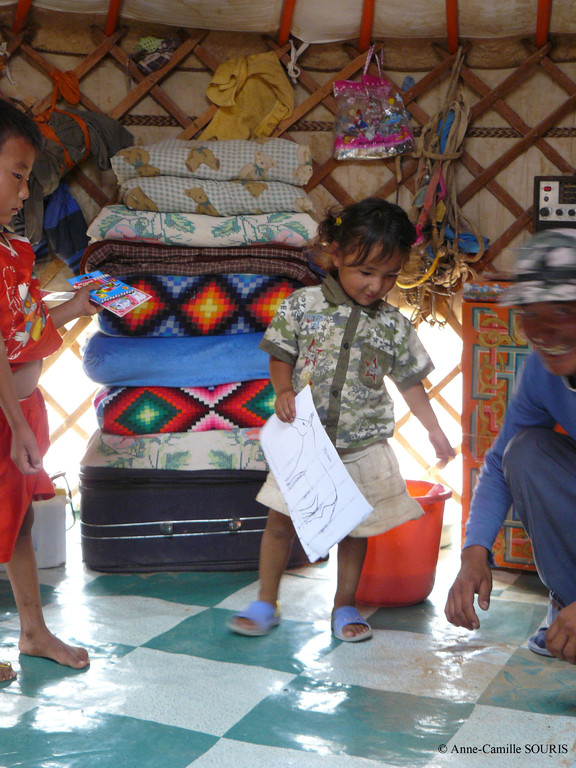


- the publication in 2016 of a bilingual English-Mongolian Children book "The lost Khulan in the Gobi". 700 copies were printed in 2016, from which half have been donated to children in our study area as well as to a few conservation organizations working in the Gobi Desert, and the other half has been sold in Mongolia and abroad and the benefits from the sales will support further educational activities in our project's study area.


- Our 'Communities in Action For Nature' board activity will be also adapted for young learners as part of our interactive and participatory learning approach.

KeyConservation