How Impact Takes Root
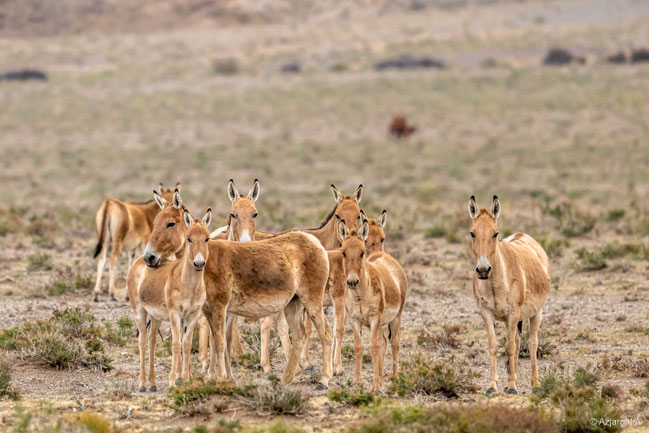
Our impact comes from staying. Long-term presence in a small number of communities in southeastern Gobi allows trust, local leadership, and stewardship to take root and endure.
Despite limited and irregular funding, our small team continues to build lasting conservation capacity within the Gobi community - and more local people and partners are now reaching out to join our efforts to protect the uncharismatic but essential Khulan and its habitat.
🌿 A small team, a lasting impact Rooted in long-term presence and community-initiated conservation since 2008
Since 2008
Since 2008 Long-term, community-based conservation engagement in the Gobi
2
Provinces (aimags) where conservation activities have been conducted
6
Provincial divisions impacted by environmental awareness actions
70+
People reached through participatory environmental training
5
Rangers trained to use camera traps for wildlife monitoring
5
Herders/community members trained / involved (3 currently active with 1 recent joiner)
1
Community engaged in long-term khulan monitoring
300+
Children’s books on Gobi wildlife donated to local schools
5 water points locally monitored
1 restored and protected / 3 protected / 1 being monitored
Khulan Day initiated locally in 2012 through co-design with a Gobi community.
These figures reflect our cumulative impact since 2008 in the southern and southeastern regions of Mongolia’s Gobi Desert, with a particular focus on the southeastern Gobi.
Our work is rooted in long-term presence and trust: a small number of trained herders become mentors, knowledge is shared (including Traditional Ecological Knowledge), and new community members continue to reach out to join ongoing monitoring and conservation efforts.
Our presence over nearly two decades has allowed science and local knowledge to work together - producing durable conservation outcomes in Dornogobi province.
🔸Locations:
- Most of our work is conducted in Dornogobi aimag/province (Khatanbulag sum, Mandakh sum, Saikhandulan sum, Huvsgul sum) which remain our focus area.
- Some of our work has been conducted in Umnugobi aimag/province (Khanbog sum, Bayan-Ovoo and Nomgon sum).
🔸Ecological impact
-
Research coverage: 2 provinces surveyed to understand Khulan ecology.
-
New data collected: 17 years of ecological monitoring data.
- Water points: 1 restored and protected / 3 protected / 1 being monitored
🔸 Knowledge and culture
-
Traditional Ecological Knowledge (TEK): Collecting and integrating local herders’ ecological knowledge into conservation planning.
-
Cultural renewal: Reviving community stories, songs, poems ... about the Khulan - reconnecting people and place.
🔸 Education & awareness
-
Children’s books donated and used in schools: 300+ children’s books distributed to children across the Gobi.
-
Community outreach: Educational activities held in 6 sums (province's division): 70+ community members empowered to protect Gobi wildlife, creating a ripple effect through their networks.
- Conservation Awareness: Over time, awareness and education (combined to local law enforcement) have helped shift local attitudes — today, reports of illegal Khulan hunting are far less frequent across our main project area.
- Conservation Education Program: 30 Grade 9 students from Khatanbulag School are currently enrolled in our pilot Khulan Education and Conservation Program. This initiative aims not only to raise local awareness about the importance of khulan conservation, but also to inspire active participation and stewardship among Gobi youth. This program has been initiated following the demand of a local teacher.
🔸 Community engagement
-
Local conservation leaders trained: 5 community members trained with 3 now leading long-term wildlife monitoring that influences decisions across two provinces.
- Strong local network developed.
-
Regional influence: Long-term work with 1 community having a broad impact on 2 Gobi provinces: Umnugobi and Dornogobi.
🔸 Endurance & credibility
Even if absolute numbers look small they emphasize consistency and resilience:
For 17 years, we’ve worked across one of the world’s toughest landscapes — keeping conservation alive for a species too often overlooked.
Our approach grows like the steppe itself: steady, enduring, and grounded in trust.
With more funding on a regular basis and with our strong local network we could achieve way more.
🌿 Beyond khulan: shared benefits for Gobi wildlife
By protecting khulan habitat as an umbrella species, our work also supports other Gobi wildlife. Some of these species are actively monitored by local communities as part of our long-term research and conservation efforts.
Selected Gobi species
Community-led monitoring and associated research also include species such as argali sheep, goitered gazelle, cinereous vulture, gray wolf and more — all dependent on intact Gobi landscapes.
📷 Community-led monitoring
Herders and local rangers contribute to observations, camera-trap data, and ecological knowledge, helping document wildlife presence and changes over time.
Khulan as an umbrella species
Protecting large, connected landscapes and access to key water and grazing areas supports the nomadic movements of khulan and helps maintain ecological processes that other Gobi species rely on.
This approach keeps conservation locally rooted while building knowledge about the wider Gobi ecosystem.
Help us expand this impact.
By protecting the Khulan — a keystone and umbrella species — you help protect Gobi ecosystems, safeguard countless other species, and strengthen the connection between local communities, their
land and its biodiversity.


KeyConservation