Community-led conservation is most effective when local knowledge, lived experience, and decision-making power are placed at the centre of the
process. In the Gobi, where landscapes are vast, pressures are increasing, and livelihoods and wildlife are deeply interconnected, this approach is not optional — it is essential.
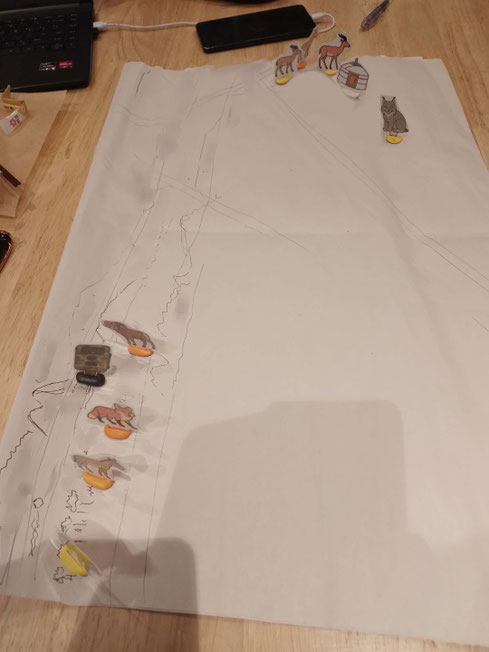
Over the past months, we have been developing a new participatory tool: the Communities in Action for Nature board activity. This activity is designed to support the collection of Traditional Ecological Knowledge (TEK), identify locally defined priorities, and co-design practical conservation strategies together with herders and communities.
Why we developed the board activity?
Conservation planning too often relies on external assessments and short-term consultations. While scientific data remains critical, it cannot replace the detailed, place-based knowledge held by herders who observe landscapes, wildlife movements, and environmental changes every day.
The board activity was developed to:
-
Create a shared visual space for discussion
-
Support structured but flexible dialogue
-
Enable community members to lead conversations
-
Bridge local knowledge with conservation planning
Rather than extracting information, the goal is to co-create understanding and solutions.
What the Communities in Action for Nature board is?
The board activity combines:
-
A simple, adaptable map representing the local landscape
-
Figurines and elements symbolising wildlife, resources, pressures, and human activities
-
A step-by-step mechanism that guides discussion from observation to prioritisation and strategy
The activity is designed to be intuitive, allowing participants to physically place elements, explain relationships, and highlight changes or concerns in a way that does not rely solely on written or technical language.
First application: learning from practice
Last week in Ulaanbaatar, we applied the first steps of the board activity with a herder who is actively engaged in conservation-led activities
with our organization.
From the outset, he took the lead in facilitating the discussion. Using the board, he designed a resource map of his area, positioned wildlife
species, and highlighted key features of the landscape. Through this process, he clearly articulated local priorities, concerns, and ideas, demonstrating how effective participatory tools can be
when they are placed directly in the hands of community members.
This initial session allowed us to better visualise current environmental challenges, including infrastructure development linked to extractive activities that is increasingly fragmenting landscapes and affecting both herders and wildlife. These discussions also helped inform our ongoing and future conservation strategies.
The first application confirmed that the overall mechanism of the activity is robust. At the same time, it highlighted opportunities for
improvement.
Over the coming months, we will:
-
Refine the map design to improve clarity and flexibility
-
Make small adjustments to the materials, such as adding a limited number of figurines and elements
-
Adapt facilitation steps based on community feedback
-
Strengthen links between the board activity, educational initiatives, and other participatory tools we use
This iterative process is intentional. The board is not a fixed product, but a living tool that evolves with the communities who use it, adapting to changing challenges and opportunities — much like the steppe itself.
Linking community knowledge and biodiversity monitoring
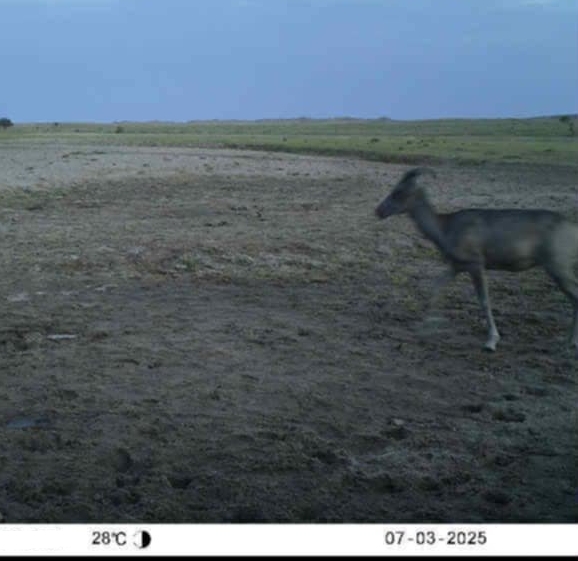
During the meeting, we also reviewed a selection of photos and videos recorded by a camera trap installed by the herder in his area. These images
provided initial insights into local biodiversity and highlighted the importance of specific areas and water sources for both wildlife and livestock.
While data analysis from last summer will soon start, these discussions reinforced the value of combining community knowledge with monitoring tools to better understand ecological patterns and conservation needs.
Looking ahead
The Communities in Action for Nature Board (TM) will continue to be piloted, refined, and expanded through collaboration with herders and communities across the Gobi. Future steps include deeper integration with education activities, biodiversity monitoring, and long-term conservation planning, with a particular focus on Khulan conservation and the protection of key steppe habitats.
Empowering local knowledge and voices remains at the core of our mission to protect the Khulan, Gobi wildlife, and biodiversity — for both wildlife and people.
We look forward to sharing further updates as this community-led approach to Khulan conservation and landscape stewardship continues to evolve.